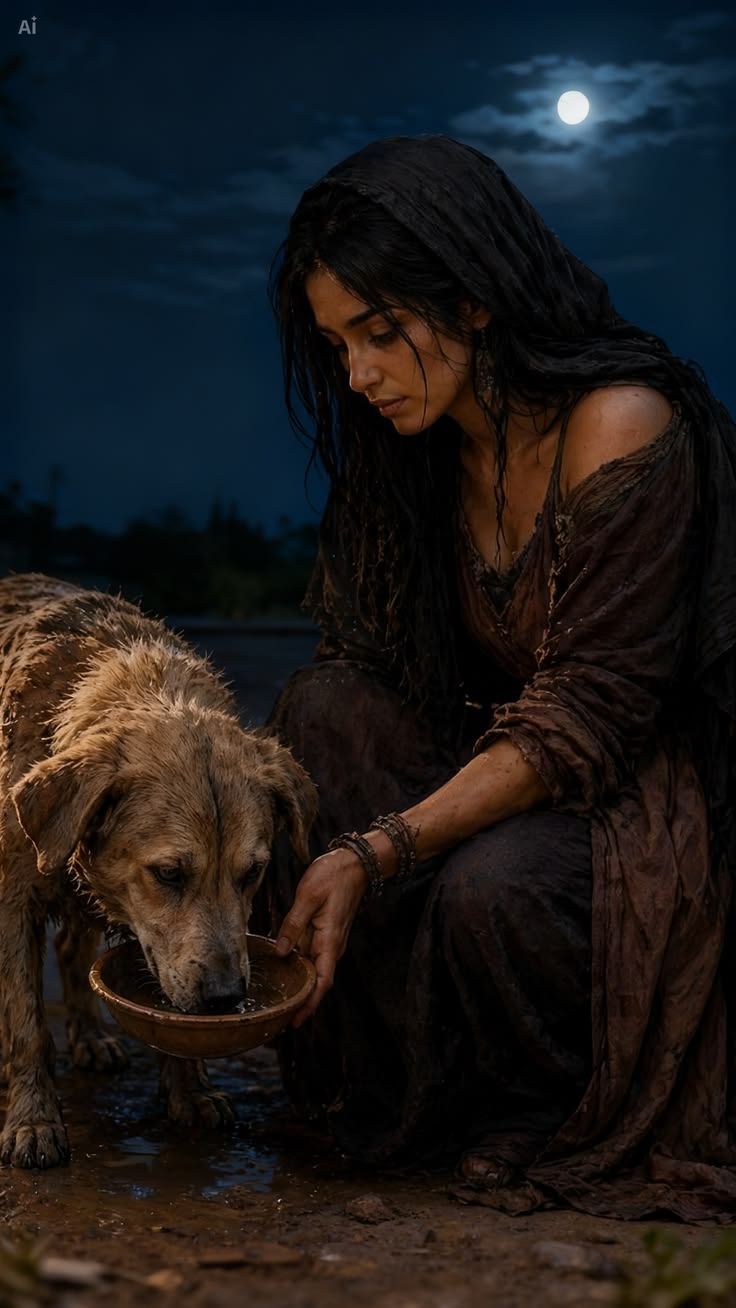
She had nothing left to give and she gave it anyway.
This was not a new condition for Mara. She had been operating at the edge of empty for so long that empty had become a kind of baseline, a familiar place she returned to each evening after spending whatever the day had required of her, which was always more than the day before and always slightly more than she technically had. She was twenty-seven and she lived in the kind of poverty that Americans who have not experienced it tend to describe in the past tense, as if it were a historical condition, a thing that happened to other people in other centuries — but which was in fact the present tense of her life, the active and daily negotiation of not enough arranged against the unchanging requirements of survival.
She had walked three miles from the shelter where she worked to the place by the river where she came when the shelter’s particular density of suffering became too much to hold inside four walls. Not every night. Enough nights that the path was familiar, that her feet knew the uneven places in the sidewalk and the gap in the chain-link fence and the way the ground changed from concrete to mud in the last fifty yards before the water.
She had brought the bowl because she always brought it. Habit, or something older than habit — the instinct of someone who has learned that the world contains need that does not announce itself until you are close enough to see it, and that you might as well be ready.
The dog was there when she arrived.
He was large and old and wet in the way that things get wet when they have been wet for a long time and the wet has become part of them. He was standing at the river’s edge in the particular posture of an animal that is thirsty but too exhausted to manage the logistics of the river itself — the bank was steep and muddy, and he was old enough that steep and muddy had become the kind of obstacle that stopped him.
He looked at Mara when she came through the gap in the fence. Not with alarm. With the patient attention of an animal who has been alive long enough to know that humans are various, that some of them are the kind you move away from and some of them are the kind you wait for, and who had apparently decided, looking at Mara in the moonlight with her bowl and her wet clothes and her face that showed what her day had been, that she was the second kind.
She filled the bowl from the water bottle she carried, which was the water she had brought for herself, and held it for him because the ground was too uneven for a bowl to sit without spilling and she could see that spilling was not something either of them could afford tonight.
He drank with the complete commitment of the very thirsty. She held the bowl and watched him and felt, in the watching, something she had not felt in several weeks — the specific satisfaction of a need met, which is different from happiness and more reliable, the small clean feeling of a thing required and a thing provided occupying the same moment.
Her name was Mara Vasquez and she had come to Memphis from Laredo four years ago following a social work position that had seemed, when she accepted it, like the beginning of a trajectory. A city job. Benefits. The possibility of a career that would let her do the work she had known since she was twelve years old, watching her mother navigate the same systems Mara now worked inside, that she was supposed to do.
The trajectory had been more complicated than the word implied. The job was real and the work was real but the pay was what the pay was, which was not enough for Memphis the way Memphis had become, and she had spent four years making the math work through means that required a creativity she was proud of in the abstract and exhausted by in the specific. The shared apartment with two roommates she mostly liked. The meal planning that was actually more like meal engineering. The careful management of what she spent on herself versus what she spent on the people her work brought into her orbit, which was a line she had always drawn in theory and in practice found very difficult to maintain.
She spent on them. This was the truth. She was not sure it was a virtue — her therapist, the one she had seen for eight months before the copays became untenable, had suggested it might be a pattern worth examining, the way some people give to the external world what they are not giving to themselves. Mara had found this interesting and true and had not known what to do with it that was practically affordable.
So she kept giving. She brought the bowl to the river. She held it for the old wet dog in the moonlight and she did not calculate what it cost.
When he finished he lifted his head and looked at her with the amber eyes of a dog who has been alive long enough to have opinions about people and who was currently revising his, upward. He pushed his nose against her knee. Not asking for more — acknowledging. The specific grammar of an animal saying: I see you. I know what you did. It was not nothing.
She sat down in the mud beside him, which ruined the last clean pants she had until Saturday when the laundromat was affordable again, and she put her hand on his wet back and felt him exhale, long and settling, the exhalation of something that has been tense for a long time and has just remembered that tension is not mandatory.
The moon above the river was full and cold and indifferent in the way that moons are indifferent, and the river moved past them both with its ancient unconcerned energy, and Mara sat in the mud with a strange dog under a full moon in Memphis and felt, for the first time all day, that she was in exactly the right place.
She had nothing left to give. She stayed anyway.
