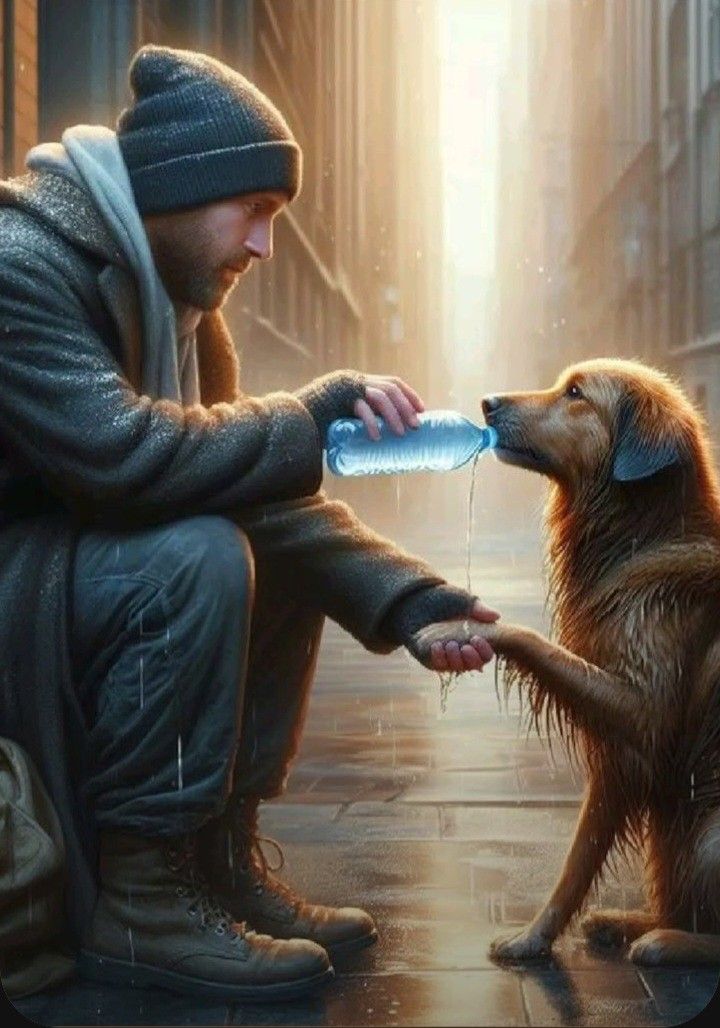
The rain hadn’t stopped for three days.
Marcus pulled his wool beanie down over his ears and pressed his back against the cold brick wall of a narrow alley in downtown Chicago. Around him, the city moved fast — umbrellas bobbing, taxis splashing through puddles, people hunched over their phones, rushing from one warm place to another. Nobody looked down. Nobody ever looked down anymore.
He had exactly four dollars and sixty-two cents in his coat pocket, a half-eaten granola bar, and one unopened bottle of water he had grabbed from a donation box outside a church on Michigan Avenue that morning. He had been saving it. His throat was dry, but something told him to wait. He didn’t know why. He would understand later.
Marcus had not always lived like this. Two years ago, he had a job managing inventory for a logistics company in Indianapolis. He had a small apartment with a second-hand couch he was proud of and a coffee maker that took four minutes longer than it should have. Then the layoffs came. Then his landlord raised the rent. Then his truck broke down. Then his sister stopped answering his calls. Life, he had learned, doesn’t fall apart all at once. It unravels, one small thread at a time, until one morning you wake up and realize there’s nothing left to hold onto.
He had come to Chicago because he heard there were more shelters here. Better resources. People who helped. That was six weeks ago. The shelters were full. The resources had long waiting lists. The people who helped were exhausted and underfunded. So Marcus sat in alleys and doorways, counting coins and watching the city that didn’t know he existed.
That afternoon, somewhere between three and four o’clock, he heard something.
It wasn’t loud. Just a low, tired whimper coming from behind a dumpster at the far end of the alley. Marcus didn’t move at first. He was cold and he was tired and he told himself it was probably the wind. But then he heard it again — softer this time, almost like a question.
He stood up slowly, his knees aching, and walked toward the sound.
Behind the dumpster, soaking wet and trembling against the pavement, was a dog. A big one — golden brown, with a thick coat now matted flat by the rain. The dog looked up at Marcus with dark, steady eyes. Not frightened. Not aggressive. Just tired. The kind of tired that goes beyond the body.
Marcus understood that look. He had seen it in the mirror.
He crouched down slowly, one hand extended, letting the dog sniff him. The animal didn’t flinch. Instead, it raised one heavy paw and placed it gently into Marcus’s open palm. The gesture was so deliberate, so human, that Marcus felt something crack open in the middle of his chest.
“Hey, buddy,” he said quietly. “You out here alone too?”
The dog blinked. Water dripped from its ears.
Marcus looked around the alley. No collar. No tags. No owner rushing around the corner calling a name. Just the rain and the distant sound of traffic and this dog, looking at him like he was the only solid thing in the world.
He reached into his coat and pulled out the water bottle — the one he had been saving all day. He twisted the cap off, thought for half a second, and then tilted it gently toward the dog’s mouth. The animal drank slowly at first, then eagerly, water spilling over its chin and dripping onto the wet pavement. Marcus held the bottle steady with one hand and kept his other hand beneath the dog’s paw.
He didn’t take a single sip for himself.
When the bottle was empty, the dog sat back and looked at Marcus again. Then it leaned its big, wet head forward and rested it against Marcus’s knee. Marcus didn’t move. He just sat there in the rain, in that alley, one hand resting on the back of a dog that had no name and nowhere to go — just like him.
For the first time in months, he didn’t feel invisible.
A woman appeared at the entrance of the alley about twenty minutes later. She was carrying groceries and walking fast, the way everyone in Chicago walked. But she slowed down when she saw them. A man in a soaked coat, crouched beside a large wet dog, both of them completely still.
She stopped.
She looked at Marcus. Then at the dog. Then at the empty water bottle on the ground beside him.
“Is that your dog?” she asked.
“No,” Marcus said. “Just met him.”
She set her groceries down. She didn’t leave.
Her name was Diane. She was a veterinary nurse at a clinic four blocks away. She had been passing through this alley for two years and had never once looked into it. Today something made her slow down. She still couldn’t explain what.
She checked the dog over carefully, running her hands along his ribs. Thin, she said. Dehydrated. But no serious injuries. A survivor. She looked at Marcus when she said that last part, and something in her tone suggested she wasn’t only talking about the dog.
She made a call. The clinic had a short-term shelter program for strays. She made another call — a friend who ran a transitional housing program for men in the area. There was a bed opening up on Friday.
Marcus listened to all of this quietly, still holding the dog’s paw in his hand.
“You didn’t have to do that,” he said finally, meaning all of it — the calls, the time, the act of stopping at all.
Diane shrugged and picked up her groceries. “You gave your last water to a stranger,” she said. “Seemed like the least I could do.”
She walked away. The dog watched her go. Then it turned back to Marcus and placed its paw in his hand one more time.
Marcus smiled. The first real smile in a very long time.
