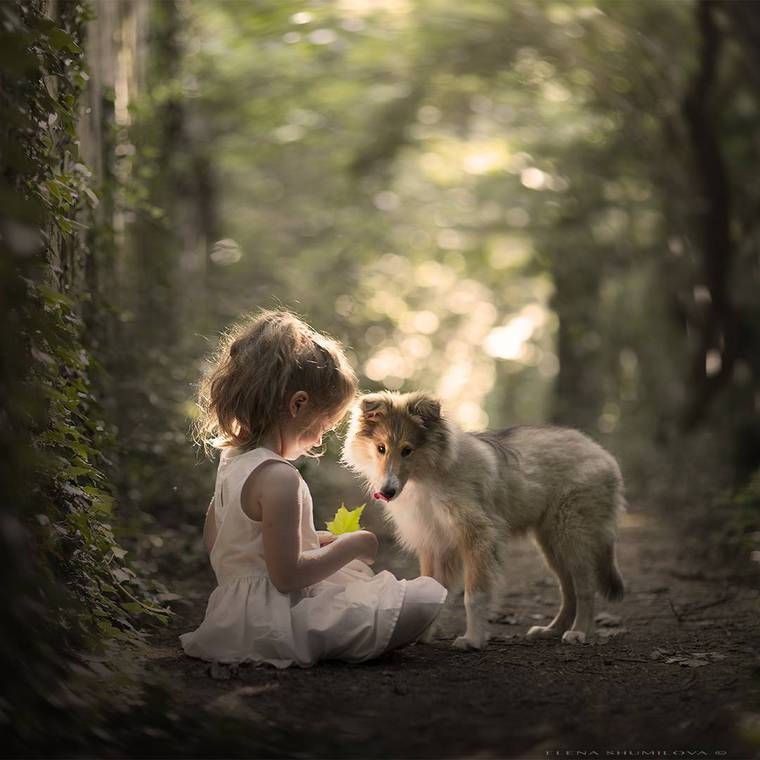
She had wandered only a little.
That was what four-year-olds did, her mother always said — they wandered only a little, and then a little more, and then suddenly they were somewhere entirely different from where you thought they were, following whatever small beautiful thing had caught their attention, completely unconcerned with the geography of the situation. Sophie Wren was very good at this. She had the particular gift of total absorption — the ability to become so completely interested in one thing that the rest of the world simply stopped existing for her, the way a spotlight makes everything outside its circle disappear.
Today the thing was a leaf.
It had fallen directly in front of her on the path behind their rented cabin in the hills outside Asheville, North Carolina — a maple leaf, still bright green at the edges but going yellow at the center, catching the late morning light in a way that made it glow like something held up to a lamp. Sophie had picked it up, turned it over, held it at different angles. She had sat down on the path to examine it more carefully, the way she sat down to examine most things — cross-legged and serious, with the focused attention of a scientist who has forgotten that lunch exists.
Her mother, who was twenty yards behind on the path answering a phone call, would look up in approximately four minutes and discover the absence. There would be the quick, vertiginous lurch of panic, the scan of the tree line, the calling of a name. All of that was coming.
But right now Sophie sat in the green cathedral of the late summer woods and looked at her leaf and did not know she was lost, because she had no idea there was anywhere else she was supposed to be.
That was when the dog appeared.
He came from the direction of the light — down the long dappled tunnel of the path, moving at a cautious trot, nose working the air. He was young, maybe four months old, a rough collie with the thick, multicolored coat of his breed and enormous paws that he hadn’t grown into yet and ears that hadn’t quite decided to stand up all the way. He was, objectively, an improbable amount of dog for a puppy to be. He was also, clearly, lost — the same way Sophie was lost, which is to say without awareness of it, moving through the world on instinct and curiosity and the magnetic pull of whatever was most interesting.
What was most interesting, apparently, was Sophie.
He stopped about four feet from her and regarded her with the alert, assessing attention of a young animal encountering something new. His nose worked. His tail, which had been held low and uncertain, began a tentative oscillation — not the full, committed wag of a confident dog but the careful half-wag of one that is interested but not yet sure.
Sophie looked up from her leaf.
She looked at the dog for a moment with the same serious, unfrightened attention she gave to everything. Then she held out the leaf toward him, palm flat, the way her father had shown her to offer things to animals. The puppy stretched his neck forward — a small, careful movement, ears pricked, eyes bright — and sniffed the leaf with great concentration.
His tongue came out and touched the leaf’s edge, briefly.
Sophie giggled. It was the particular giggle of a child who has just been surprised by something delightful — a sound so purely happy that it startled a bird from a nearby branch.
The puppy’s tail moved more decisively.
He took one step forward, then another, and then he was close enough for Sophie to reach out her small hand and touch the thick fur of his ruff. She did this with great gentleness, the way she had been taught — no sudden movements, no grabbing — pressing her fingers into the warm, soft depth of his coat and feeling him lean slightly into her hand with the instinctive pleasure of a dog being touched exactly right.
They stayed like that for a while in the green morning light, the small girl and the lost puppy, conducting the ancient, wordless negotiation of trust that needed no language to complete itself. Sophie told him about the leaf — she was a talker, in the running, stream-of-consciousness way of four-year-olds who have not yet learned to self-edit — and the puppy listened with his head tilted slightly, ears at their most upright, with the earnest attention of someone who was following more than you might expect.
She named him Sunny, because of the way the light came through the trees and touched his coat.
She said it out loud, once, firmly, as if registering it somewhere official: “Your name is Sunny.” Then she went back to showing him the leaf, turning it so the light came through it, making the veins visible. “See?” she said. “It glows.”
Sunny pressed his nose against the leaf again.
“My daddy says leaves are like hands,” Sophie said. “The tree’s hands. They catch the light.” She considered this. “I think you’re like that. Like you caught the light and came here.”
She was four. She said things like this without knowing they were beautiful.
The sound of her mother’s voice reached them then — distant, carrying the particular frequency of a mother who is not yet fully panicked but is very close — cutting through the green quiet of the woods.
Sophie looked up. She looked at Sunny. She stood up from the path and dusted off her white dress with the businesslike practicality of a child who has made a decision.
“Come on,” she said to the puppy. “My mama’s calling.”
She turned and walked back toward the voice, leaf in hand.
Sunny followed. There was never any question that he would. He stayed exactly one step behind her small bare feet the whole way back, through the dappled light and the quiet trees, as if he had been waiting in those woods for exactly this girl to come and show him the way out.
