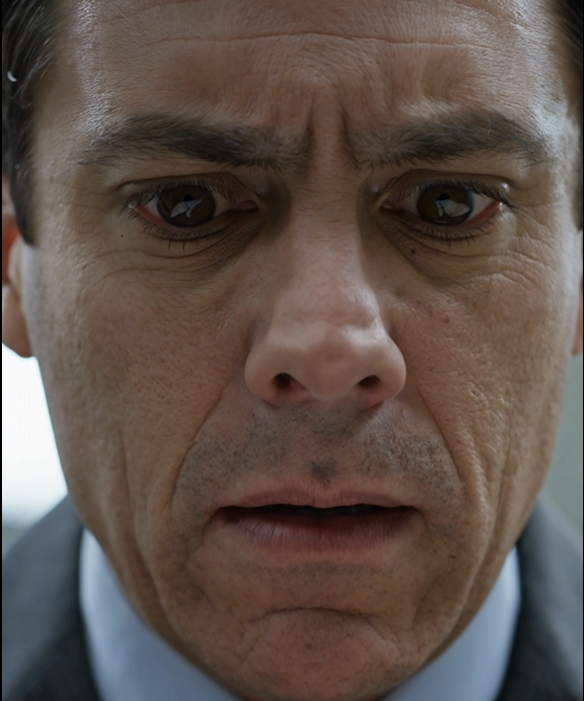
The boy placed the credit card on the counter with both hands like it mattered.
“Check the balance,” he said.
The teller barely looked up. He was mid-conversation with the woman in the next window, joking about something that had nothing to do with work. When he finally glanced down and saw the kid — maybe nine, ten at most — standing there in an oversized hoodie, he smirked.
“Yeah, okay,” the teller said, dragging the words out. “Where are your parents, kid?”
A couple of employees nearby chuckled. One of them leaned over just enough to get a look.
“Kid thinks he’s got a black card or something,” someone muttered.
“Check the balance,” the boy repeated. His voice didn’t rise. It didn’t need to.
The teller sighed dramatically, tapped a few keys just to look busy, then slid the card back across the counter with two fingers.
“Listen,” he said, not even trying to hide the irritation now. “This isn’t a playground. You can’t just walk into a bank and—”
The boy didn’t pick the card up.
“Just check it,” he said quietly. “My mother gave it to me before she died.”
That got a reaction — not sympathy, not really, but a shift. The kind of pause people take when something stops being funny, even if they don’t fully understand why.
The teller hesitated, then shrugged.
“Fine. Five seconds,” he said. “Then you’re out of here.”
He grabbed the card again, more out of annoyance than curiosity, and ran it through the reader.
The system lagged.
“Yeah, that’s about right,” he muttered. “Probably not even activated.”
He tapped the screen. Waited.
Then the account loaded.
And the teller’s expression changed.
It wasn’t immediate. It wasn’t dramatic. It was small at first — a flicker in the eyes, a tightening in the jaw. The kind of reaction you’d miss if you weren’t looking directly at him.
But the boy was.
“What is it?” one of the other employees asked, leaning closer.
The teller didn’t answer.
He refreshed the screen.
Same result.
He swallowed.
“That… that can’t be right,” he said under his breath.
“Read it,” the boy said.
The teller looked up at him, really looked this time, like he was seeing him for the first time.
“Kid,” he said slowly, “where did you get this card?”
“My mom,” the boy replied. “I told you.”
“What’s her name?”
The boy hesitated for half a second.
“Anna Reyes.”
The teller went still.
The name hit something — not loudly, not like a shockwave, but like a memory sliding into place where it didn’t belong.
“Hold on,” he said, pushing back from the counter. “Don’t go anywhere.”
“I wasn’t planning to,” the boy said.
The teller walked quickly to the back office, the card still in his hand. The laughter in the bank had died completely now. People were watching, whispering, trying to figure out what just happened.
The branch manager, a woman in her forties named Denise Carter, looked up as the teller approached.
“What’s going on?” she asked.
“You need to see this,” he said, handing her the card and turning the monitor toward her.
She frowned, adjusted her glasses, and looked at the screen.
Then she went quiet.
“That’s not possible,” she said after a moment.
“That’s what I said.”
“Run it again.”
“I did. Twice.”
Denise leaned closer, scanning every line of the account details. The balance alone was enough to make anyone stop — more money than most people would see in a lifetime. But it wasn’t just the number.
It was the account history.
Or the lack of it.
“This account shouldn’t be active,” she said. “It was flagged.”
“For what?”
She didn’t answer right away.
Instead, she picked up the card, turned it over in her hand, studying it like it might explain itself.
“Where’s the kid?” she asked.
“Out front.”
“Bring him back here.”
—
The boy didn’t resist when the teller returned and asked him to come to the office. He followed quietly, hands in his hoodie pocket, eyes moving slowly across the bank like he was taking everything in.
Denise gestured to the chair across from her desk.
“Have a seat,” she said.
He sat.
She placed the card gently on the desk between them.
“You said your name is…?”
“Daniel.”
“Daniel what?”
“Reyes.”
Denise nodded once.
“And your mother is Anna Reyes.”
“Was,” he corrected.
A small pause.
“I’m sorry,” she said automatically, though it didn’t sound like she knew what she was sorry for yet. “When did she pass?”
“Three days ago.”
Denise’s eyes flickered again, this time with something closer to recognition.
“I see,” she said.
She didn’t, not fully. But she was starting to.
“Daniel,” she continued, choosing her words carefully, “this account… it’s unusual.”
“My mom said you’d say that.”
That made her stop.
“She told you that?”
He nodded.
“She said people here wouldn’t want to help me,” he said. “That they’d pretend nothing was wrong. That I’d have to make you look.”
Denise leaned back slightly.
“Look at what?” she asked.
The boy’s gaze didn’t waver.
“At what you did.”
The room went very still.
The teller shifted uncomfortably near the door.
“Okay,” Denise said, a little too quickly. “I think there’s been some kind of misunderstanding—”
“There’s a transfer,” the boy interrupted.
Denise froze.
“A transfer?” she repeated.
“From the account,” he said. “My mom said to ask you about it.”
Denise didn’t speak.
“Thirty thousand dollars,” the boy continued. “Two years ago. She said you’d remember that one.”
The teller looked at Denise.
Denise didn’t look at him.
“That’s not something you would know,” she said carefully.
“She showed me,” the boy replied.
“How?”
The boy reached into his pocket.
For a second, both adults tensed — not because they expected anything dangerous, but because the moment felt wrong in a way they couldn’t explain.
He pulled out a folded piece of paper.
Old. Creased. Handwritten.
He placed it on the desk.
“She said to give you this if you didn’t believe me.”
Denise stared at it like it might bite.
“Go ahead,” the boy said.
Slowly, she picked it up.
Unfolded it.
Her eyes moved across the page.
And then—
Her face drained of color.
The teller took a step closer.
“What is it?” he asked.
Denise didn’t answer.
She read it again, slower this time, like maybe the words would change.
They didn’t.
“What does it say?” he pressed.
She lowered the paper just enough to look at him.
“It’s…” she began, then stopped.
Her voice came back quieter.
“It’s a confession.”
The boy nodded slightly.
“She said you’d call it that.”
Denise’s hand trembled.
“This isn’t real,” she said. “This—this is—”
“It’s your handwriting,” the boy said.
Silence.
Heavy. Crushing.
The teller’s eyes flicked between them.
“What is going on?” he demanded.
Denise closed her eyes for a second.
When she opened them again, something in her had shifted — not fixed, not resolved, but cracked.
“Two years ago,” she said slowly, “there was an internal audit. Small accounts. Dormant ones. We were… under pressure.”
The teller stared at her.
“What are you saying?”
“I’m saying,” she continued, “that sometimes money moves in ways it shouldn’t.”
“You stole it,” the boy said.
Denise flinched.
“It wasn’t like that,” she said quickly. “It was temporary. It was supposed to be—”
“Temporary?” the teller snapped. “You moved thirty grand out of someone’s account?”
“She wasn’t supposed to notice,” Denise said.
The moment the words left her mouth, she knew how they sounded.
The boy didn’t react right away.
Then—
“She did notice,” he said quietly.
Denise swallowed.
“Yes,” she said.
“And then she got sick.”
Denise looked down.
“Yes.”
“And you thought that solved your problem.”
“I didn’t think—” she started, then stopped.
Because that wasn’t true.
She had thought exactly that.
The boy reached forward and tapped the credit card lightly with one finger.
“She didn’t forget,” he said. “She just waited.”
Denise’s breathing had gone shallow.
“What do you want?” she asked.
The boy looked at her for a long moment.
Then he said something that made the room feel even smaller.
“She said to tell you there’s a second transfer.”
Denise’s head snapped up.
“What?”
The boy’s voice stayed calm.
“It started when you checked the balance.”
Denise turned sharply to the computer.
Her hands moved fast now, pulling up the account activity again.
And there it was.
A new transaction.
Live.
Processing.
From her account.
Her personal account.
“No,” she whispered. “No, no, no—”
The number climbed.
Five thousand.
Ten.
Fifteen.
“This isn’t possible,” she said. “This isn’t how the system works—”
“It is today,” the boy replied.
She turned back to him, panic rising now, real and uncontrollable.
“Stop it,” she said. “Whatever this is, stop it!”
The boy shook his head.
“I can’t.”
“Then who can?”
He held her gaze.
“My mom said you already know the answer.”
Denise’s mind raced, searching for something — logic, explanation, anything.
But all she could see was the letter.
Her handwriting.
The truth she thought had been buried.
“How much?” she asked weakly.
The teller glanced at the screen.
His voice came out barely above a whisper.
“All of it.”
Denise’s knees gave slightly, and she had to grab the edge of the desk to stay upright.
The boy stood.
“I have to go,” he said.
Neither of them tried to stop him.
“Wait,” the teller said suddenly. “Kid—Daniel—what happens now?”
The boy paused at the door.
He didn’t turn around.
“She said the truth doesn’t stop,” he answered. “It just waits until someone is ready to hear it.”
And then he walked out.
—
By the time Denise stumbled out of the office a few minutes later, the bank felt different.
Quieter.
Heavier.
“Where is he?” she asked.
The teller shook his head.
“He’s gone.”
“Gone where?”
“I don’t know. He just… walked out.”
Denise moved toward the front doors, pushing them open.
Outside, the street was empty.
No boy.
No yellow hoodie.
Nothing.
Just a small piece of paper lying near the entrance, shifting slightly in the breeze.
She picked it up.
Another note.
Shorter this time.
Her hands trembled as she read it.
“This was the first account. There are others.”
Denise looked up slowly, her heart pounding.
For the first time, she understood something clearly.
This wasn’t over.
Not even close.
