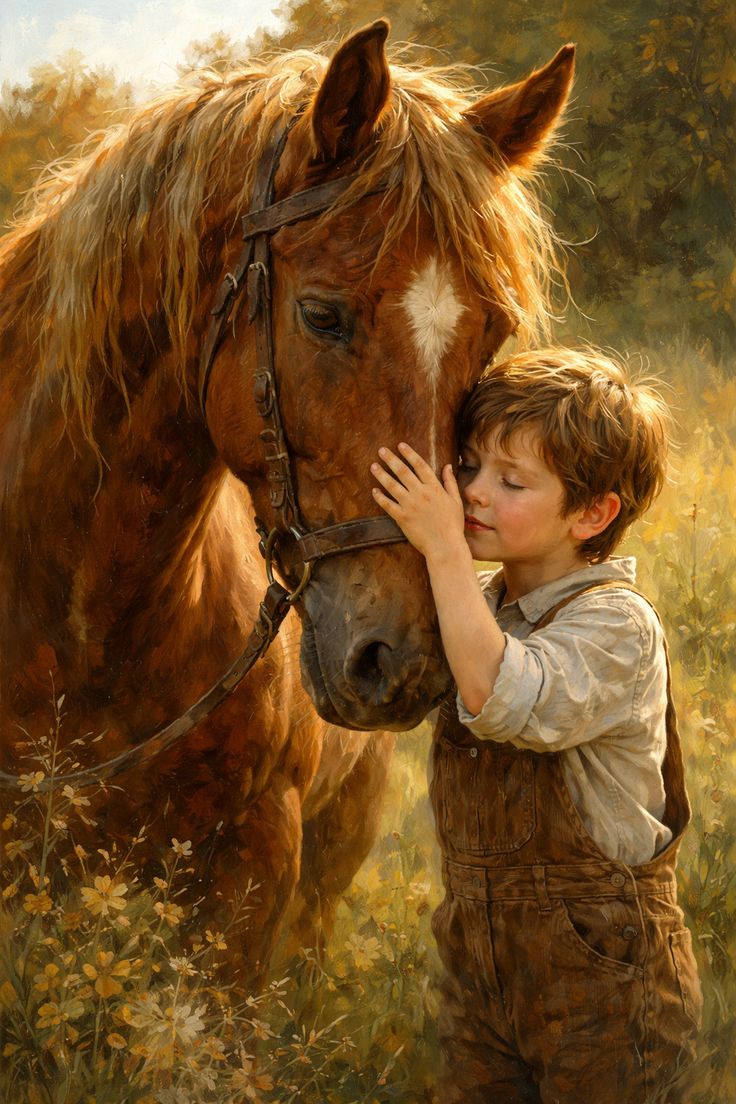
The morning they were going to sell Copper, nobody told Danny.
That was how his parents handled hard things — quietly, between themselves, in the kitchen after he’d gone to bed. His father would speak in that low, flat voice he used when the numbers didn’t work, and his mother would listen without interrupting, and by morning a decision would have been made and the world would have changed and Danny would walk into it without warning, the way you walk through a screen door you didn’t see was closed.
He found out the way he found out most things — by being somewhere the adults forgot to account for.
He was in the hayloft when the man from Clarksburg came. Broad man, clean boots, the kind of clean that said he didn’t work in them. He walked the fence line with Danny’s father, and Danny lay flat on the loft boards and listened through the gaps, and he heard the number his father named and the way the man from Clarksburg said it back, agreeing, and then they shook hands the way men shake hands when a thing is settled.
Copper was twelve years old and chestnut red, with a white blaze down his face like a question mark someone had given up on finishing. He had been on the Calloway farm since before Danny was born. He was the first thing Danny had ever loved that loved him back without condition.
Danny climbed down from the loft before the men turned back toward the house.
He went to Copper’s paddock and let himself through the gate and stood in the tall grass and the yellow wildflowers that had come up along the fence line that summer, the ones his mother called a nuisance and Danny privately thought were the most beautiful things he had ever seen. Copper came to him immediately, the way he always did — not for feed, just for the company. He lowered his big head and Danny pressed his cheek against the broad warm face and closed his eyes.
He was eight years old, and he understood, in the way children understand things before they have the words for them, that something was ending.
“They’re going to sell you,” he whispered.
Copper breathed out slowly through his nose. His breath smelled like hay and summer and the particular sweetness of a thing that has never once been dishonest with you.
Danny’s father, Tom Calloway, was not a cruel man. He was a tired man, which is a different thing entirely, though it can look the same from the outside. Three bad harvests in four years had done to the farm what three bad harvests do — stripped it down to the wire, made every line item a question, turned a man who used to whistle while he worked into a man who stood at the kitchen window before dawn and just looked at the dark. Copper was an expense. The man from Clarksburg had offered good money.
Tom knew what the horse meant to the boy.
He told himself Danny would understand when he was older. He told himself boys are resilient. He said these things in his head in the kitchen after Danny went to bed, and his wife, Marie, listened without interrupting, and by morning the decision was made.
The man from Clarksburg was coming back Thursday with a trailer.
Danny spent every hour he could find between now and Thursday in that paddock. He brought Copper apples from the tree along the back fence. He brushed his mane until it shone like something worth saving. He talked to the horse the way he couldn’t talk to anyone else — about school, about the kids who made fun of his boots, about the way his father had stopped whistling, about the fear that lived in the farmhouse now like a fifth member of the family, quiet and permanent, taking up space at the table.
Copper listened the way horses listen — with his whole body, weight shifted, ears tuned like antennae toward the source of the voice.
On Wednesday night, Danny didn’t sleep.
He lay in his bed and stared at the ceiling and made the kind of bargains children make with a universe that isn’t listening, offering up his birthday, his allowance, his best baseball cards, anything, everything, if Thursday could just not come.
Thursday came.
Danny was at the paddock gate at six in the morning. His father came out at seven, coffee in hand, and stood beside him, and for a while neither of them said anything. The sun was coming up over the east tree line, gold and indifferent, lighting up the wildflowers along the fence like something out of a painting.
“Dad,” Danny said.
“I know,” his father said.
It was the most honest conversation they’d had in months.
Tom Calloway stood there in the early light and looked at his son’s face and then at the horse and then at his son’s face again. He thought about the three bad harvests. He thought about the number the man from Clarksburg had said, agreeing. He thought about boys and what they carry and how long they carry it.
Then he set his coffee cup on the fence post, took his phone out of his pocket, and made a call.
The man from Clarksburg didn’t come Thursday.
Danny never knew exactly what his father said on that phone call. Tom never offered and Danny never asked, because some things between fathers and sons are sacred precisely because they stay unspoken. What Danny knew was this: that morning his father came back through the paddock gate and picked up his coffee and looked out at the field and — quietly, almost to himself — began to whistle.
It was the first time in a year.
Copper lifted his head at the sound, ears forward, like he was hearing something he’d been waiting a long time to hear.
Danny pressed his face against the horse’s cheek and breathed.
Some things are worth more than the number a man from Clarksburg says while standing at a fence line in clean boots. Some things, once lost, you spend the rest of your life trying to find your way back to.
Tom Calloway figured he’d come close enough to losing one that he didn’t need to find out about the other.
