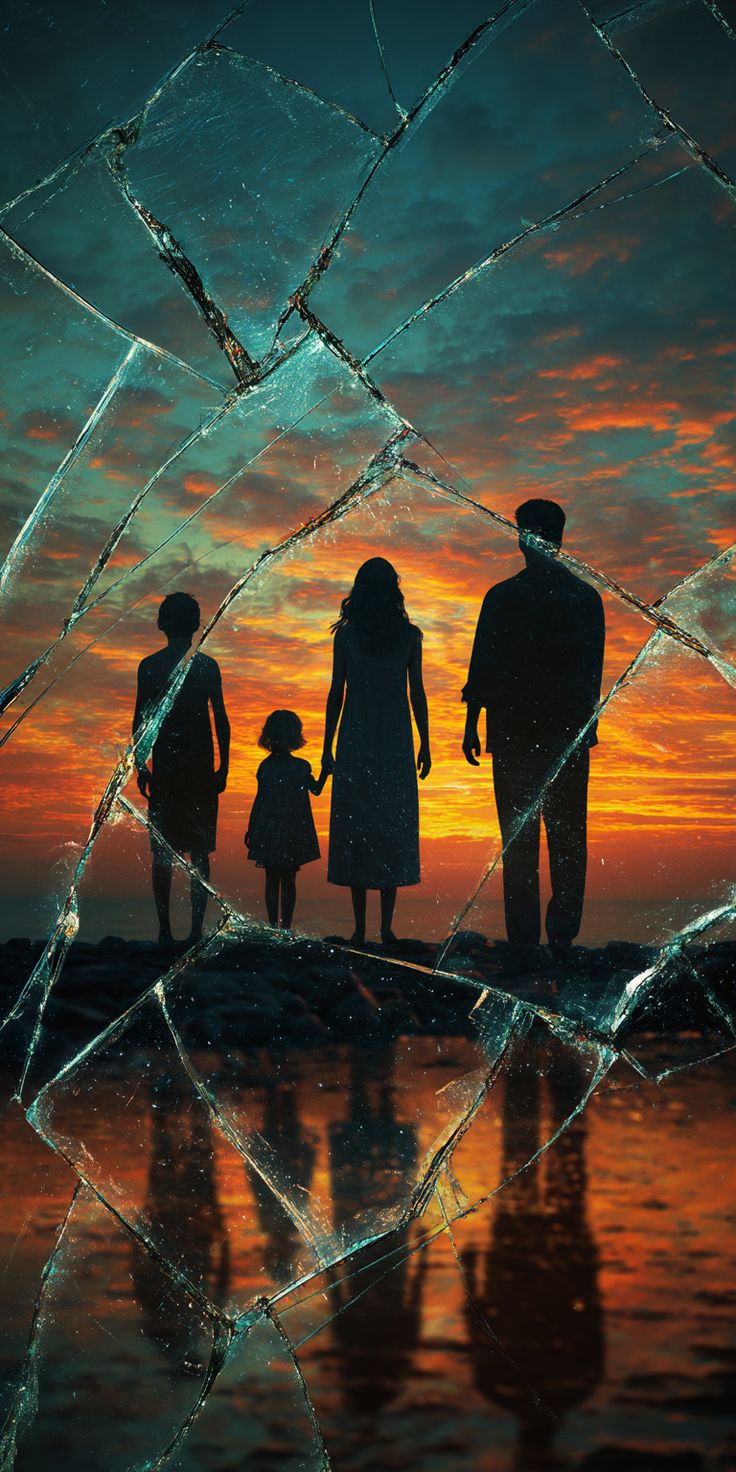
They looked whole from the outside.
That was the thing Elena Marsh thought about most, standing at the edge of the water with the sun bleeding out across the horizon in every shade of fire the sky knew how to make. Her daughter Abby, six years old, held her left hand with both of hers, the way small children hold on, completely, without reservation, as if letting go were simply not a concept they had yet learned. To her right stood her husband, David, close enough to touch but not touching. And somewhere just behind her left shoulder, her son, Connor, thirteen, stood in that particular teenage posture of performed indifference that she had come to understand was its own kind of need.
Four silhouettes against a burning sky. A family portrait. Beautiful, even.
She wondered what they looked like to anyone watching from a distance. She wondered if the cracks were visible yet, the ones she felt running through everything, fine as spider silk and twice as strong. The ones that had started, she could now admit to herself, not in the last year of hard months, but much further back, in small quiet moments she had chosen not to examine.
David had suggested this trip two weeks ago, sitting across the kitchen table from her with the particular careful expression he had been wearing since March. “We need time,” he had said. “All of us. Together. Away from everything.” He had meant it sincerely. She knew that. David did most things sincerely. It was both his greatest quality and, in its own way, part of what had made the last year so difficult to navigate, because sincerity without communication was just a feeling with nowhere to go.
They had driven eight hours to reach this stretch of Oregon coast. Eight hours of audiobooks and drive-through food and Abby asking questions about the ocean with the relentless curiosity of a child who had not yet learned that adults run out of answers. Connor had worn his headphones for most of it, which Elena had allowed because choosing battles was now a core survival skill, and the headphone battle was one she had decided to lose gracefully.
The cabin was beautiful. Of course it was. David had spent three evenings researching it, reading reviews aloud to her, showing her photographs on his laptop with a hopefulness that broke her heart a little, the way hope can when you love someone and aren’t sure love is currently enough. She had said it looked wonderful. She had meant it. She was capable of meaning things that existed alongside other, harder things. That was what thirty-nine years of being human had taught her.
The first evening had been good. Genuinely good. They had made dinner together in the cabin kitchen, the four of them moving around each other in the small space, and Abby had stood on a step stool to stir the pasta and David had let Connor control the music, which had been a gesture that cost him something and was received, Elena noticed, with a slight softening around the boy’s eyes. They had eaten at the table by the window with the dark water visible beyond the glass, and for an hour it had felt like a version of them she recognized. The version from before.
Before what, exactly, she still struggled to name as a single thing. It wasn’t one event. That was the deceptive part of how families fracture. You look for the moment, the specific before and after, the line in time where everything changed. But usually it wasn’t a line. It was a collection of small erosions. A year of financial pressure that made everyone shorter with everyone else. A promotion David had lost that he hadn’t talked about properly, carrying it instead like an injury he was determined not to limp on. Connor hitting adolescence like a wall and Elena reaching for him and finding someone she didn’t yet know how to reach. Her own tiredness, the deep structural kind that sleep didn’t touch, the kind that came from holding the emotional weather of a household for so long that she had forgotten what it felt like to put the weight down.
She had not told David any of this clearly. That was her part of it. Her contribution to the erosion. She had spoken in hints and sighs and loaded silences, the language of people who are too tired to be direct and too proud to ask plainly for what they need.
Now she stood at the water’s edge with the sunset fracturing the sky and her daughter’s hands around hers and the husband she still loved standing close enough that she could hear him breathe.
“It’s beautiful,” David said. He wasn’t talking about the sunset. She understood that. He was a man who said things on two levels, always had been, and she had married him partly because of that quality and had spent years wishing he would just say the plain thing.
“It is,” she agreed. She meant both levels too.
Abby tugged her hand. “Mama, if you fell into the water right now, would the fire go out?”
Elena looked down at her daughter. “What fire, baby?”
“The sky fire.” Abby pointed at the horizon with great seriousness. “It went into the water. So maybe if you fell in you’d be on fire.”
Connor made a sound that was almost a laugh. Almost. Elena turned and caught the edge of it on his face before he reassembled his expression into neutrality. She held the moment like a coin she had found unexpectedly, something small and real and worth keeping.
David reached out then. Not dramatically, not with words attached. He just found her hand in the fading light and held it. His thumb moved once across her knuckles.
She didn’t pull away. She held on, the way her daughter had taught her, completely, without reservation.
The sun went down. The four of them stood in the dark that followed, whole enough, together enough, still here.
For the first time in months, she thought that might actually mean something.
