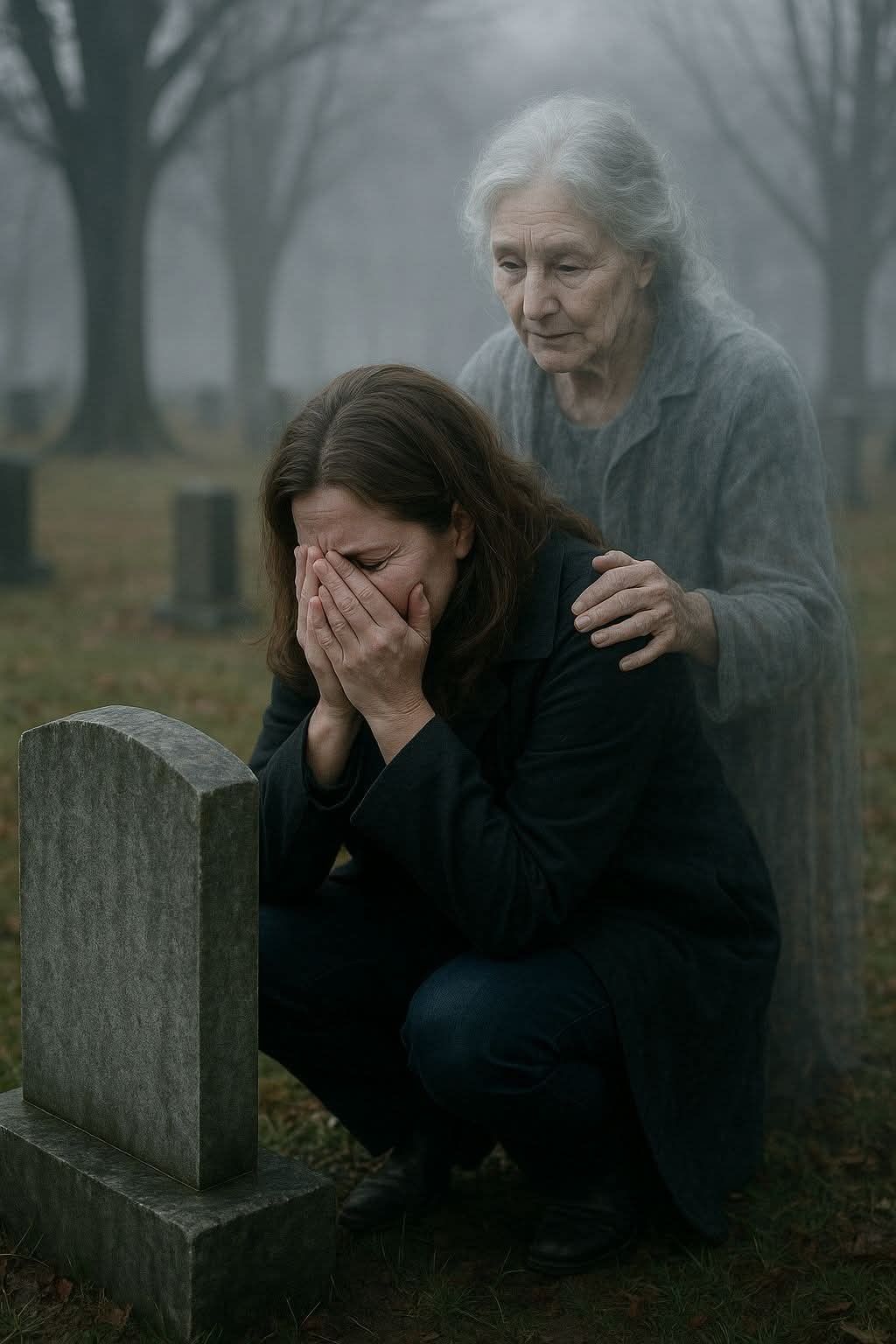
The cemetery had no right to be beautiful.
That was the thought that moved through Laura Hensley’s mind as she drove through the iron gates of Millbrook Cemetery in Harlan County, Kentucky — the same thought she’d had every time she’d made this drive for the past eleven months, because the place was beautiful, undeniably, in the way that certain landscapes achieve beauty not despite their sadness but through it. The fog sat low between the bare November trees, softening everything, turning the headstones into suggestions of themselves. The grass was the particular deep green that cold mornings produce. The light, what there was of it, came from everywhere and nowhere, diffuse and gray and strangely gentle.
Her mother would have called it lonesome beautiful.
Her mother had called a lot of things that. A certain chord in a certain hymn. The sound of a train at distance. The way the mountains looked from the back porch in winter, stripped of leaves, showing their bones.
Her mother had been the person who taught Laura that some things were allowed to be both.
Margaret Ann Hensley had died on a Wednesday in December, eleven months and four days ago, at seventy-three years old, in the bedroom she had shared with Laura’s father for forty-one years in the farmhouse outside of Harlan where Laura had grown up. She had died of congestive heart failure, which the doctors had been managing for two years and which had ultimately declined to be managed, in the way that certain things decline. She had died with Laura on one side of the bed and Laura’s brother Paul on the other, and their father Harold sitting in his chair in the corner of the room — the chair he had moved from the living room to the bedroom eight months earlier and had not moved back — holding his hat in his lap and looking at his wife’s face with the expression of a man watching something he has spent forty-one years depending on and cannot imagine the world without.
Laura had held her mother’s hand.
She had felt the exact moment. That was the thing about being present, about not looking away — you felt it, not dramatically, not with the clear narrative beat that movies suggested, but as a kind of settling. A weight released. The particular quality of a hand that has, in the space between one breath and the next, become something you were not holding anymore.
She had not known what to do with that knowledge for eleven months.
She parked at the edge of the gravel path and walked across the wet grass to the plot in the eastern section, under the oak tree that Margaret had once pointed to from the road and said, with the matter-of-fact directness she brought to all things including the logistics of her own mortality: “That’s a good tree. That’s where I want to be.”
She had meant it. Harold had seen to it.
Laura crouched in front of the headstone.
Margaret Ann Hensley. Beloved Wife, Mother, Friend. She made this world more gentle.
Paul had written it. Laura had changed gentler to more gentle in a conversation that had lasted forty minutes and resolved nothing, and in the end Harold had settled it by saying his wife had always used more gentle rather than gentler because she said it sounded less like a contest — and that had been, as their father’s quiet observations often were, both linguistically irrelevant and completely right.
Laura pressed her hands over her face.
This was the thing about grief — not the part she had been warned about, which was the large formal occasions, the first Thanksgiving, the first Christmas, the first birthday. She had survived those with the help of her family and the casseroles of neighbors and the particular solidarity of shared loss. What she had not been warned about adequately was this: the ordinary Tuesday. The random November morning when you woke up and the absence was simply there, unchanged, waiting for you with the patience of something that does not have anywhere else to be.
She had driven two hours for no reason she could explain to anyone sensibly. She had called in to work — a sub, her third-graders were fine — and driven because the alternative was sitting in her apartment in Lexington with the specific silence of a place that had no room for the size of what she was carrying.
Mom, she thought. I don’t know how to do this without you.
This was the other thing that grief did — it narrowed you to the most essential truth. All the sophisticated architecture of adult life, the coping and the managing and the functioning, collapsed in certain moments to something that simple and that complete. She was forty-three years old and a licensed social worker who spent her professional life helping other people navigate loss, and she was crouched in a wet cemetery thinking the same thought that every child thinks when the parent who was supposed to be permanent has become a headstone under an oak tree.
I don’t know how to do this without you.
The fog moved.
It moved the way fog moves in Kentucky cemeteries on November mornings — not dramatically, not with the sudden shift of weather, but with the slow drift of something that has its own intentions. It thickened briefly around the oak tree and then settled, and the cold came with it, and Laura wrapped her arms around herself against the chill.
And then she felt it.
On her shoulder. The right shoulder, specifically. A weight — light, particular, warm in a way that the November air had no business producing. The weight of a hand. The specific weight, with the specific pressure, of a hand that she had felt on that exact shoulder ten thousand times in the course of a life built in that hand’s presence.
She did not move.
She did not look.
She understood, with the full and serious attention of a woman who was also a daughter who had been paying attention her whole life, that looking might be the wrong response. That some things asked to be received rather than examined. That her mother had always known the difference between what needed to be seen and what needed to be felt.
The weight stayed.
The fog held.
Laura breathed.
I’m here, said the morning, or the fog, or the hand on her shoulder, or the oak tree, or the forty-one years of a woman who made this world more gentle still doing, from wherever she was, the one thing she had always done best.
She stayed.
