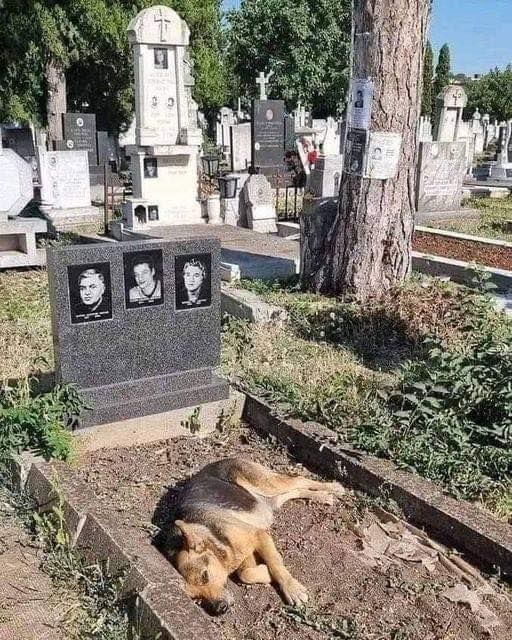
The groundskeeper of Saint Michael’s Cemetery in Millbrook, Tennessee was a man named Theodore Pruitt, seventy-one years old, who had tended these three acres of the dead for going on twenty-two years and believed, with the quiet conviction of someone whose beliefs had been tested by long proximity to loss, that a cemetery was not a sad place.
It was, he would tell you — if you asked, and sometimes if you didn’t — a place of keeping. A place where the essential truth of a person was maintained after the noise of their living had stopped. The stones didn’t lie. They couldn’t be edited or revised or softened. They said: here is who was here. Here is what they meant to someone.
Theodore had seen many things in twenty-two years that confirmed this view. He had seen families arrive in pieces and leave, sometimes, more whole. He had seen old men sit for hours talking to stones with a fluency and openness they probably never managed when the listening was reciprocal. He had seen children leave drawings, lovers leave flowers, veterans leave coins on the markers of other veterans — a tradition he had researched and found so quietly profound that he kept a quarter in his pocket specifically for that purpose.
But he had never seen anything like the dog.
The dog had appeared six weeks after the Vanek family was buried.
This required explanation. The Vaneks — Martin, Elena, and their daughter Sophie — had died in a car accident on Route 9 on a Sunday evening in March, the kind of accident that a small town absorbs like a wound, slowly and incompletely. Martin had been fifty-three, a high school shop teacher who had spent twenty years putting tools into the hands of kids who didn’t know they needed them. Elena had run the bakery on Collier Street for sixteen years; her cinnamon rolls were mentioned at the funeral by four different speakers without any apparent coordination. Sophie had been seventeen, a junior, a soccer player, a girl who her friends described with the aching specificity of those who have loved someone and are now in the business of making sure that love is on record.
They were buried together, the three of them, beneath a dark granite stone with their photographs set into the face — a European custom, Martin’s mother had insisted on it — so that they looked out from the stone with the same faces they had carried through their lives.
The dog had no name that anyone in Millbrook could attach to it. A German Shepherd mix, reddish-brown, with the lean build of an animal that had spent time fending for itself. No collar. No chip, as the animal control officer who attempted to collect it discovered — attempted being the operative word, because the dog had declined removal with a quiet, ground-level stubbornness that stopped just short of aggression and communicated, in terms the officer found himself reluctantly respecting, that it had no intention of going anywhere.
It slept on the grave.
Not near the grave. Not in the general vicinity of the grave. On it — stretched across the earth directly before the stone, chin resting on its paws, in the particular posture of an animal that is both resting and maintaining vigilance, the posture of something on watch.
Theodore first noticed it on a Wednesday morning in late April, and assumed it would be gone by Thursday. It was not gone by Thursday. By the following Monday he had stopped assuming it would leave and started leaving a bowl of water near the tree at the edge of the plot, which the dog accepted without acknowledgment, the way genuinely dignified creatures accept things they need without making it a transaction.
He started leaving food three days after that.
The dog ate. It did not follow him. It did not seek his company or his attention. It accepted the provision the way it accepted the water — practically, without sentiment, as fuel for the continuation of whatever it understood its purpose to be.
Word spread the way word spreads in small Tennessee towns — thoroughly and with embellishment, though in this case the facts required none. People came to see. They stood at a respectful distance and watched the dog sleep on the grave of a family that had mattered to this town, and something about the image — the absolute faithfulness of it, the uncomplicated declaration of loyalty that required no language and offered no explanation — did something to people that Theodore couldn’t have predicted.
They left things. Not for the dog specifically — though some left food, and Theodore gently redirected that to his own bowl system to protect the dog’s stomach. They left things for the Vaneks. More flowers than the grave had seen since the funeral. A soccer ball, left by Sophie’s teammates, that Theodore at first moved and then returned when it seemed wrong to remove it. Letters. Photographs. A small ceramic cinnamon roll that he was certain came from someone who had been a regular at Elena’s bakery and wanted that known.
The grave of the Vanek family became something Theodore had no official category for — not quite shrine, not quite memorial, something between the two, animated by a dog that slept in the summer heat and the spring rain with absolute indifference to weather and absolute fidelity to place.
Martin’s mother, Irena, came from Cleveland in May. She was eighty-one, arriving with her daughter supporting her arm, moving with the careful economy of someone whose body had become expensive to operate. She stood at the grave and looked at the dog for a long time without speaking.
Then she said, in the accented English she had carried from Czechoslovakia sixty years ago: “He knew them.”
Not a question.
Theodore, standing nearby with his hat in his hand, said gently: “We don’t know where he came from, ma’am. Nobody in town recognized him.”
Irena Vanek looked at him with the patient eyes of a woman who has lived long enough to know the limits of what towns recognize.
“He knew them,” she said again, with the quiet certainty of a period at the end of a sentence that doesn’t require argument.
She reached down, slowly, and placed her hand on the dog’s back.
The dog opened its eyes. It looked up at her — directly, fully — and its tail moved three times against the earth of the grave. Slow. Deliberate.
Then it put its head back down and closed its eyes.
Irena straightened. She pressed her fingers to the photograph of her son on the stone, then her daughter-in-law, then her granddaughter. She said something in Czech that Theodore didn’t understand and didn’t ask about.
She came back every month after that. The dog always knew she was coming before she was visible.
It always moved its tail exactly three times.
